Fighter Cut › Articles › Supplements & nutrition
Supplements & nutrition
Gut problems in fight camp
There is a measured physiology behind the nausea, and it explains more than you would expect — but almost all of it was measured in endurance athletes, and one of the things fighters are most certain about turns out to be the weakest finding in the literature.
Your stomach is not weak and you are not soft. What happens to the gut during hard exercise is a measured, named, largely reversible physiological event, and it has been described in enough detail that the usual explanations — nerves, a bad breakfast, not being in shape yet — are mostly beside the point.
The event is called exercise-induced gastrointestinal syndrome. It runs down two pathways at once. One is circulatory: blood is redistributed away from the gut toward working muscle and toward the skin for heat dumping, so total splanchnic perfusion falls. The other is neuroendocrine: sympathetic activation reduces the gut's functional capacity — how fast it empties, how fast it moves things along, how well it absorbs. Both start within minutes of going hard, and neither asks your permission.
Here is the constraint you need before any of the numbers below. Every mechanistic figure in this article was measured in endurance sport — running, cycling, triathlon, ultramarathon — in mostly male, mostly adult, well-trained cohorts. None of it was measured in a fighter doing rounds. The mechanism transfers on paper, because a fighter's splanchnic circulation works the same way as a cyclist's, and because a fighter gets hot and dehydrated too. But it has not been measured in this sport, with two exceptions, and both of those exceptions are small.
Every figure in this piece was measured in a described group of people under described conditions. None of it is a plan for your body, and a fight camp is the wrong time to experiment on yourself without a sports dietitian or a physician who can see you.
What follows: the mechanism and its laboratory numbers; the duration threshold and why it is not a permission slip; the three amplifiers — heat, dehydration and anti-inflammatories — each measured separately; what an energy deficit does on top; the one combat-sport measurement anyone has; anxiety; pre-session feeding; gut training and what it does not do; fibre restriction and the timeline nobody has published; a worked Tuesday that puts the stack together; and the symptoms that are not this at all and go to a doctor today.
Intestinal fatty acid binding protein, the marker of injury to the cells at the villus tip, roughly doubled after 60 minutes of cycling at 70% of maximal wattage — in 20 healthy men, mean age 23.6, in a thermoneutral lab. In that same study there was no bacterial translocation and no renal damage: the injury was transient
van Wijck et al., PLoS One 2011, PMC3141050
The review-level threshold at which "significant gastrointestinal perturbations manifest, irrespective of fitness status", in laboratory and field endurance studies. It is not a statement that shorter sessions are harmless — shorter and harder work moves the markers too
Costa, Snipe, Kitic, Gibson, Aliment Pharmacol Ther 2017, doi 10.1111/apt.14157
Pooled across 132 exertional-heat trials (97 male, 35 female), core temperature at or below 39.0 °C predicted an I-FABP rise at or below ~1200 pg/mL; at or above 39.5 °C it predicted ~1500 pg/mL or more. Core temperature predicted the markers and upper-gut symptoms — but showed no significant regression outcome for nausea specifically
Henningsen et al., Temperature (Austin) 2023, PMC10989703
Gut training reduced discomfort and improved carbohydrate absorption across 8 studies (79% male, almost all cyclists, runners or triathletes) but produced no significant change in markers of intestinal injury and permeability. It teaches tolerance, not immunity
Martinez, Mika, Biesiekierski, Costa, Sports Med 2023, PMC10185635
- The nausea has a measured mechanism, and it starts fast. Portal blood flow has been reported to fall by 20% within 10 minutes of steady-state exercise beginning, and by 80% after one hour of running at 70% VO₂max, in healthy trained adults. Nothing about that requires a mistake on your part.
- The injury measured in the laboratory was transient. In 20 healthy men cycling for an hour, the injury marker doubled and bile-acid binding protein nearly tripled, and there was no bacterial translocation and no kidney damage. A gastric marker of splanchnic ischaemia in the same population was back to baseline one hour after exercise finished.
- Heat is the amplifier with the cleanest evidence, and it is measured as core temperature, not as room temperature. Across 132 trials in 21.2–37.2 °C, what predicted the damage markers was how hot the athlete got, not how hot the room was.
- "Dehydration wrecks your gut" is overstated, and the strongest test is the reason. Male endurance runners running two hours at 70% VO₂max with total water restriction (3.1% body-mass loss) versus euhydrated (0.6%) showed significantly higher I-FABP — but the authors report only "modest perturbations" in gut integrity, function and symptoms overall. The marker moves more than the symptoms do, and we hold that study at abstract level only.
- Anti-inflammatories are the amplifier a fighter most often controls and most often ignores. In nine healthy trained men, peak I-FABP was 875 ± 137 pg/mL for ibuprofen plus cycling against 474 ± 74 for cycling alone, 507 ± 103 for ibuprofen at rest and 352 ± 44 for rest alone. That article carries no doses and neither does our page on painkillers in camp — dosing is a question for a physician or pharmacist.
- Gut training works on the thing you feel and not on the thing that is happening. Discomfort fell 47% with two weeks of repetitive carbohydrate feeding and carbohydrate malabsorption fell 45–54%, while markers of intestinal injury and permeability did not significantly change. It also has no standard protocol, and none of it was run in a combat athlete or in a deficit.
- There is exactly one fetched combat-sport measurement. In 24 elite male boxers, judoka and wrestlers across a four-week pre-competition phase at 2.91% body-mass loss, the weight-loss-alone group "exhibited exacerbated gastrointestinal symptoms", with I-FABP moving 179.72 → 194.15 pg/mL and calprotectin 459.52 → 522.71 ng/mL. Male-only, elite-only, n=24.
- The convergence is an inference, not a measurement. Heat, dehydration and anti-inflammatories each have their own controlled trial. No study has combined them with an energy deficit in a combat athlete, so no combined magnitude exists and this article does not invent one.
- Blood in the stool, black or dark red stool, bloody diarrhoea, persistent vomiting, severe pain, or weight falling when you are not trying to lose it are not training problems. They go to a doctor, and this article says nothing further about them.
1. What exercise-induced gastrointestinal syndrome actually is
The syndrome has a definition that is useful precisely because it is unglamorous: it is the collection of changes to gut integrity, function and symptoms that hard exercise produces, running down the two pathways named above.
The circulatory pathway is the one most people can picture. During exercise, cardiac output is directed to where the work is. Skeletal muscle needs it, and skin needs it for thermoregulation, which means the splanchnic bed — the stomach, intestines, liver and their circulation — is the donor. Blood is taken from the gut because the gut is not currently the priority.
The figure most often quoted for how fast that happens comes from the 2017 systematic review: portal blood flow has been reported to decrease by 20% within 10 minutes, and by 80% after one hour of running at 70% of maximal oxygen uptake. Attach the conditions to that, because they get stripped off constantly. That is steady-state running, at 70% VO₂max, for one hour, in healthy trained adults. It is not a fighter, and it is not an interval session.
The neuroendocrine pathway is less intuitive and does more work than people credit. Increased sympathetic activation reduces gastrointestinal functional capacity directly — the gut slows down, empties later, and absorbs less, because the nervous system has switched it to a lower priority. This is why the anxiety literature later in this article is not a separate soft story bolted onto the physiology. It is the second half of the same physiology.
What the syndrome produces, in the order people actually notice it: upper-gut symptoms first. Across the endurance events reviewed in the literature, upper-gastrointestinal symptoms including nausea predominate over lower-gut symptoms during exercise. If your complaint is that you feel sick in every hard round and not that you are running to the toilet, you are describing the more common half of the syndrome, not an unusual one.
2. The laboratory numbers, and whose bodies they came from
The cleanest single study in this space is a controlled trial in 20 healthy men, mean age 23.6, BMI 21.0, cycling for 60 minutes at 70% of maximum wattage in a thermoneutral laboratory. Everything about it is ordinary except the measurement.
Gastric arterialised carbon dioxide tension — a marker of splanchnic ischaemia — rose by 1.7 kPa, most pronounced during the first 10 minutes, and was back to baseline one hour after exercise. Intestinal fatty acid binding protein, a 14-kilodalton protein released from injured mature enterocytes at the tip of the villus, rose from 309 ± 46 to 615 ± 118 pg/mL. Intestinal bile acid binding protein rose from 5.06 ± 1.27 to 14.30 ± 2.20 ng/mL. Both changes were statistically significant.
Now the half of that study that almost never gets quoted: there was no bacterial translocation and no renal damage, despite measurable intestinal injury. The injury was transient. The cells at the villus tip are among the most rapidly replaced in the body, and a marker in the blood saying some of them were shed is a description of a process, not a diagnosis of a disease.
Two further numbers set the range. In thermoneutral conditions, three hours of exercise — two hours of running at 60% VO₂max followed by a one-hour self-paced distance test — produced mean plasma I-FABP above 1000 pg/mL. And at the other end, even a single 30-minute bout of resistance-type exercise significantly raised I-FABP by 35%, with measurably impaired protein absorption after it in the same protocol, measured with labelled phenylalanine.
That 30-minute resistance finding is the closest thing in the literature to a fighter's session, and it is one finding. Hold it loosely. What it suggests is that the gut is not indifferent to short, hard, non-endurance work — which matters, because a strength session or a hard technical round is not two hours of steady running and people assume that exempts it.
Injury and permeability are related but not identical. One hour of running at 70% VO₂max perturbs the tight-junction regulatory proteins — the zonula occludens family — and increases intestinal permeability measured by dual-sugar lactulose/rhamnose testing. Permeability is the barrier getting leakier; injury is cells being shed. The studies measure both because they do not always move together.
One more figure, for scale rather than alarm: faecal blood loss was reported in 14% of male triathletes after a three-hour cycle-run protocol at 77% VO₂max, in 22 °C. That is a research finding in a described protocol. It is not permission to ignore blood in your own stool, which is section 14's business and a doctor's.
3. The two-hour threshold, and why it is not a permission slip
The systematic review states a threshold in plain words: "Exercise stress of ≥2 hours at 60% VO₂max appears to be the threshold whereby significant gastrointestinal perturbations manifest, irrespective of fitness status."
A fighter reads that and does the obvious arithmetic. Most hard camp sessions are shorter than two hours. Therefore the gut problem belongs to marathoners. Therefore something else is wrong with me.
That reading is wrong in two directions. First, the threshold was derived from steady-state endurance protocols, and a fight session is not steady-state. It is intermittent high-intensity work — rounds and rests, spikes well above 60% VO₂max, a warm-up, a hard middle, a drill block. No fetched study measures the gut response to that shape of session. The threshold is a construct from a different sport's training, and the honest statement is that the equivalent number for sparring has never been calculated.
Second, the "irrespective of fitness status" clause is the part that answers the question people are really asking. It says the threshold is not something you train past. Getting fitter does not raise it. Whatever protection experience gives you against feeling terrible, this particular measurement was not moved by fitness.
What the threshold is genuinely useful for is the opposite of exoneration. It argues against blaming one round of sparring, and for the accumulation story — two sessions a day, weeks in a row, in a deficit, with heat and dehydration and sometimes a tablet layered on each one. Nothing in the literature measures accumulation across a camp either. But the structure of the argument is that the amplifiers matter more for a fighter than the raw duration does, because the duration is where a fighter's exposure is smallest and the amplifiers are where it is largest.
4. Amplifier one: heat, measured as core temperature
Heat is the amplifier with the best evidence, and the best evidence has a specific shape: what predicts the damage is your core temperature, not the temperature of the room.
The study is a pooled analysis of 132 exertional-heat-stress trials — 97 male and 35 female, mean age 32.1 ± 7.7 years, VO₂max 57.7 ± 7.9 mL/kg/min — with ambient conditions spanning 21.2 to 37.2 °C, using either two hours of running at 60% VO₂max or high-intensity intervals at roughly 55–80% VO₂max, with rectal temperature taken every 10 to 15 minutes.
The prediction: core temperature at or below 39.0 °C corresponded to an I-FABP rise of about 1200 pg/mL or less, and a soluble CD14 rise of about 600 ng/mL or less. Core temperature at or above 39.5 °C corresponded to an I-FABP rise of about 1500 pg/mL or more and sCD14 of about 800 ng/mL or more. Half a degree of core temperature, across the range where fighters actually train, is associated with a meaningful difference in how much gut injury the session produces.
Consistent with that, the largest exercise-associated I-FABP rises in the 2017 review's tables came from vigorous exercise in hot ambient conditions around 30 °C, and the highest reported small-intestinal permeability came from marathon competition and from running at 70% VO₂max or above with body temperature at or above 39 °C — with or without external heat stress. That last clause matters: you do not need a hot room to reach a hot body.
Now the honesty problem inside the best evidence. In that same 132-trial analysis, maximal core temperature correlated with total and upper-gut symptoms, but the authors report "no significant outcomes in regression analyses were observed for … lower-GIS and nausea." Heat predicted the markers. It predicted the upper-gut symptom cluster. It did not, in that analysis, come out as a significant predictor of nausea specifically — which is the single symptom most fighters would name first.
Read that carefully rather than around it. It does not mean heat is irrelevant to feeling sick. It means that in this dataset, with this regression, nausea did not track core temperature the way the injury markers did. Symptoms and markers are different outcomes, and one of the running themes of this entire literature is that they move apart more often than the popular version admits.
There is a widely circulated pair of figures comparing hot and temperate trials — a much larger percentage rise in I-FABP in 35 °C than in 22 °C. We could not get to the primary paper for those numbers, only to a search summary, so they are not printed here. The core-temperature thresholds above come from a full text we read, and they say the same thing more usefully anyway.
5. Amplifier two: dehydration, where the folklore overshoots
This is the section where a fighter expects confirmation and the literature declines to give a clean one.
Start with what is solid. There is a dose-response relationship with intensity in which temperature and fluid loss move together. One hour of running in thermoneutral conditions at 40, 60 and 80% VO₂max produced final rectal temperatures of 38.0, 38.7 and 39.6 °C and exercise-induced body-mass losses of 0.6, 1.2 and 1.9%, with small-intestinal permeability rising in proportion. Healthy runners; a small, old, carefully done study reported inside the 2017 review.
The most transferable single finding for a fighter is the sauna one. Taking participants 2.7% down in body mass by sauna before cycling at 70% VO₂max impaired gastric emptying and increased gut symptoms including nausea, compared with starting euhydrated. A fighter reading that recognises the protocol immediately, because it is what happens in a lot of gyms on a lot of afternoons.
Report the other half of that study too, because it is in the same paragraph of the same review: hydration status had no effect on orocaecal transit time, intestinal permeability or glucose absorption. The stomach emptied slower and people felt worse. The barrier measurements did not move.
And there is a direct counter-example on timing. Dehydration to the same 2.7% body-mass loss twelve hours before exercise did not influence gastric emptying during subsequent steady-state exercise at 65% VO₂max. Same magnitude of fluid deficit, different timing, different result. Whatever this effect is, it is not a simple function of how much water is missing.
Two more solid findings on the amplifying side. Withholding fluid during running, to roughly 1.5% body-mass loss, increased gastroduodenal and intestinal permeability above resting levels. And participants who finished with more than 2% body-mass loss and plasma osmolality above 300 mOsmol/kg had higher average circulating endotoxin than those who stayed euhydrated drinking ad libitum, during two hours of running at 60% VO₂max in 34 °C.
Now the finding that forces the honesty. The strongest single controlled test of this question took male endurance runners through two hours of running at 70% VO₂max in two conditions: euhydrated, at 0.6 ± 0.6% body-mass loss, against total water restriction, at 3.1 ± 0.7%. Hypohydration produced significantly higher I-FABP — and the authors report only "modest perturbations" in gastrointestinal integrity, function and symptoms overall.
So the blunt claim that dehydration wrecks your gut is overstated. In the best-designed test of it, the marker moved and the experience mostly did not. We hold that study at abstract level only — the publisher blocked the full text on two routes — which is a further reason not to build a confident story on either side of it.
Over-hydrating is not the correction, either. Exercise-associated hyponatraemia is itself linked to gut symptoms, particularly nausea and regurgitation. There is no fluid schedule in this article and there is not going to be one; what fluid intake should look like in a training week has its own page and its own argument, and that page's job is to dismantle the bare performance claim rather than to give you a number to hit either.
6. Amplifier three: anti-inflammatories
This is the amplifier a fighter chooses, which makes it the one worth knowing about.
The evidence is a randomised crossover in nine healthy trained men with four conditions: ibuprofen plus cycling, cycling alone, ibuprofen at rest, and rest alone. Peak I-FABP came out at 875 ± 137 pg/mL for ibuprofen plus cycling, 474 ± 74 for cycling alone, 507 ± 103 for ibuprofen at rest, and 352 ± 44 for rest alone, at p < 0.002. Urinary lactulose/rhamnose ratios over the first two hours followed the same ordering: 0.08 for the combination against 0.04, 0.05 and 0.01.
Conditions, as always. Nine men. Healthy, trained, cycling in a laboratory. We hold this one at abstract level as well — the paper was paywalled on two routes — though its findings are corroborated qualitatively by both of the full-text reviews we did read. Nine people is a small crossover, and the effect it reports is large and consistent across two different kinds of measurement, which is why it survives the small n better than most.
The wider clinical context is not athlete-specific and is not small: non-steroidal anti-inflammatory drugs carry a three- to fivefold increased risk of upper gastrointestinal complications, mucosal bleeding or perforation in the general clinical literature. And the 2017 review's recommendation is direct: "The administration of NSAIDs prior to exercise can markedly increase intestinal injury and permeability in response to exercise, so avoidance of NSAIDs prior to exercise would be recommended."
This article contains no doses, no thresholds and no timing for any anti-inflammatory, and that is not caution for its own sake — the amount that is appropriate for you depends on your kidneys, your liver, your blood pressure, what else you are taking and what is actually wrong with the joint. That is a physician's or a pharmacist's answer. The rest of the case against habitual use in camp, including the kidney argument that a weight-class sport makes specific, is set out separately and also carries no doses.
7. What the deficit itself does
Everything above assumes an athlete who is merely training hard. A fighter in camp is also eating less than they are spending, usually for weeks.
The 2023 IOC consensus statement on Relative Energy Deficiency in Sport lists impaired gastrointestinal function as a primary health outcome of the condition, and gives its presentation as "abdominal pain/cramps/bloating/alteration in bowel movements". That outcome is evidence-flagged for both female and male athletes. It is not a footnote in the consensus; it is a row in the table of what low energy availability does to people.
That is a consensus-level statement, which is a particular kind of evidence — expert synthesis of a literature, not a single trial with an n you can inspect. The mechanistic story underneath it, the one about suppressed motility, delayed gastric emptying and altered gut hormone secretion producing fullness and bloating, appears in secondary and clinical commentary and in a small cross-sectional study in female athletes. We did not get to primary sources for that mechanism, so it is reported here as reported, and not as established.
What the consensus does establish, usefully, is the opposite of self-diagnosis. Its own differential-diagnosis column for impaired gut function names coeliac disease, inflammatory bowel disease, Helicobacter pylori, gastro-oesophageal reflux, functional dyspepsia and constipation, and medication effects including antidepressants, iron tablets, narcotics and laxative or cathartic use in eating disorders. The consensus itself says these symptoms must not be assumed to be energy deficiency.
And its assessment column is entirely clinical: oesophageal manometry, upper endoscopy, electrogastrography, gastric emptying studies, radiopaque marker and orocaecal transit studies, imaging for superior mesenteric artery syndrome. Diagnosis here is a clinician's job, in the consensus statement's own framing. Nobody has been diagnosed with anything by reading an article, including this one.
If the deficit rather than the session is the part of this you recognise, the broader picture of what low energy availability does in combat sport has its own page, and the gut row is one of many.
8. The one combat-sport measurement
There is exactly one fetched study that measured gut-barrier markers in fighters across a real pre-competition weight loss, and it is worth stating in full because it is all we have.
Twenty-four elite male combat athletes — boxers, judoka and wrestlers — mean age around 22, were followed across a four-week pre-competition weight-loss phase in a trial of probiotic supplementation. The arm that lost weight without supplementation "exhibited exacerbated gastrointestinal symptoms". I-FABP moved from 179.72 to 194.15 pg/mL and calprotectin from 459.52 to 522.71 ng/mL, over a body-mass loss of 2.91%.
Note the size of those marker movements compared with the laboratory numbers in section 2. A single hour of cycling doubled I-FABP acutely. Four weeks of weight loss moved a resting measurement by a much smaller proportion. These are different questions — an acute response to one session versus a baseline shift across a month — and putting them side by side is useful for one reason only: it shows that the chronic signal in a real camp is subtle, while the acute signal in a single session is large.
The conditions on this study are heavy. It is male-only. It is elite-only. It is 24 people. It is one four-week phase, at a body-mass loss smaller than many fighters run. Its purpose was to test a supplement, which means the weight-loss-alone group is a comparison arm rather than the object of the study. And no fetched source extends it to women, to amateurs, to adolescents, or to a larger descent.
What it is not is a licence to say that the endurance numbers have now been confirmed in fighters. They have not. One 24-person male trial with a different primary question is what the combat-sport evidence base consists of, and pretending otherwise is the single most common failure in writing about this topic.
9. Anxiety, and the second pathway
The neuroendocrine half of the syndrome has its own measured evidence, and it is better than most people expect for something that sounds like a cliché.
Forty-four ultramarathon runners — 26 male, 18 female, mean age 40.3, with pre-existing gastrointestinal conditions excluded — were assessed before and during a 56 km race using a competitive state anxiety inventory, a short recovery and stress scale, and a 14-item gut symptom questionnaire scored 0–10 for severity.
Across all participants, race gut symptoms correlated with recovery at rs = −0.381 (p = 0.011), with stress at rs = 0.500 (p = 0.001) and with anxiety at rs = 0.408 (p = 0.006), with the anxiety association strongest in the 24 hours before the race. In the men alone the correlations were much stronger: stress at rs = 0.703 and total anxiety at rs = 0.747, both p < 0.001. A regression accounted for 36% and 40% of the variation in symptom severity and symptom number using body mass and measures of stress, anxiety and gut symptoms over the three preceding days, at p < 0.001.
And in the 18 women, no significant correlations were detected at all — despite those same women reporting significantly greater state anxiety (p = 0.018) and lower self-confidence (p = 0.006) before the race, with similar gut symptom rates. That is not a finding that women are unaffected. With 18 participants it is at least as likely to be a finding that the study could not detect an effect that size. Either way, the sex-specific picture is unmeasured, and reading the male correlation onto a female fighter is not supported by this study.
All of it is correlational, from a single race, in recreational ultra-runners. It does not establish that anxiety causes gut symptoms; stress and symptoms could both be downstream of something else, and people who feel sick before a race have something real to be anxious about. What makes it more than a correlation curiosity is that the mechanism was already there: sympathetic activation reducing gut functional capacity is one of the two named pathways of the syndrome. The psychology is not a separate explanation competing with the physiology. It is a route into it.
For a fighter, the practical content of that is limited and worth stating precisely: the week where the weigh-in is close, the camp has been long, and sleep is poor is the week where two of the amplifiers — stress and heat — are both at their highest. That is an observation about when symptoms cluster, not a technique for preventing them.
10. Pre-session feeding: measured, mixed, and not a plan
What you ate before the session is the first thing everyone blames, and the literature is less decisive about it than gym folklore is.
The measured association is broad rather than specific: fibre, fat, protein and fructose have all been associated with a greater risk of developing gastrointestinal symptoms during exercise. Note that this is an association across a review's included studies, not a ranking, and note that the list contains three of the four things food is made of.
Some specifics are firmer. Beverages with high osmolalities — above 500 mOsm/L — were associated with increased symptom incidence. Products that are exclusively fructose, particularly drinks, are singled out for avoidance. Those are two of the few concrete statements in this part of the literature.
Carbohydrate dose is genuinely mixed. One study found more severe symptoms in women at high carbohydrate intakes during exercise; another found very few symptoms — around 10% of runners — at a comparable intake from gels; and in a 221-athlete study, carbohydrate intake correlated positively with nausea and flatulence, but the authors noted the nausea was relatively mild. Three studies, three shapes of answer. Anyone presenting a single carbohydrate rule as settled is choosing one of them.
The clearest folklore casualty is gluten. Over 41% of a surveyed non-coeliac athletic population followed a gluten-free diet believing it reduced gut symptoms. A blinded controlled study in 13 male and female athletes found no difference in gut symptoms, intestinal injury or systemic cytokine response with gluten versus without. That is one small blinded study against a very large belief, and in a blinded design a small study is worth more than a large survey, because the survey is measuring what people think.
The most transferable measured finding in this section is about habit rather than composition: athletes not accustomed to ingesting fluid and food during exercise had a twofold risk of developing gastrointestinal symptoms. Being unpractised is itself a risk factor, which is the empirical basis of the next section.
Finally, the mechanical reason food behaves differently in a hard session than at rest. Gastric emptying is impaired and small-intestinal transit is slowed at higher intensities, at or above roughly 70% of peak power output, with malabsorption of both actively and passively absorbed sugars after running at 70% VO₂max compared with rest or with 30–50% VO₂max. The food is not moving at the speed you are used to. Nothing in this article converts any of that into grams, timings or a pre-session meal.
11. Gut training: real, and not what you were told it was
Gut training is the one intervention in this space with a systematic review behind it, and the review is unusually clear about which half works.
The evidence base: 8 studies out of 304 screened, participants aged 15 to 35, 79% male, and almost all of them cyclists, runners or triathletes — with one junior Australian Rules football study and one in race walking. Protocol durations ran from 4 days to 28 days, most commonly two weeks.
What improved. Gut discomfort fell by 47% with two weeks of repetitive carbohydrate feeding during exercise, across two studies, and by 26% with repeated fluid ingestion over five trials in one study. Carbohydrate malabsorption was reduced by 45 to 54% in two studies. Two studies found significant improvements in total, upper and lower gut symptoms. The original trial of the idea — two weeks of a high hourly carbohydrate intake during daily running, taken either as a glucose-and-fructose gel or as carbohydrate-rich food — reduced overall gut discomfort and total and upper-gut symptoms by more than 40% against a three-hour gut challenge, with no change in the placebo arm.
What did not improve, in the review's own words: "No significant changes in … markers of intestinal injury and permeability were found (n = 3)." Gastric emptying rate did not change across two studies. Inflammatory cytokine results were inconclusive.
That is the honest shape of gut training and it is worth stating without softening: it teaches you to cope, not to be undamaged. The barrier injury the earlier sections describe is the thing that did not move. What moved was how much discomfort the athlete reported and how much carbohydrate they could actually absorb — which are real, valuable outcomes for someone who has to eat during a long event, and which are not the same as protecting the gut.
The review also names its own limits. Participants were mostly male and, in the authors' phrasing, "findings may not be representative of the responses among female athletes". Measurement tools were highly variable between studies. Elite athletes already performing at a high level showed minimal gains. And, flatly: "A standard gut-training protocol does not yet exist."
Add the transfer limitation, which is the part that decides whether any of this belongs in a fight camp. Every one of these protocols trained tolerance of carbohydrate and fluid during prolonged steady-state endurance exercise. None was run in a combat athlete. None was run in a caloric deficit. None was tested against an intermittent high-intensity session. There is no basis here for claiming that gut training fixes camp nausea, and this article does not make that claim.
12. Fibre restriction, and the timeline nobody has published
The low-residue week before a weigh-in is a fight-week instrument, it belongs to the pages scoped to fight week, and there is no protocol for it here. What belongs in this article is what fibre restriction does to the gut and what is known about coming back from it.
Fibre appears on the measured list of dietary components associated with greater risk of exercise gut symptoms, which is the actual rationale people are reaching for when they cut it. That is the honest version of why it is done: not because fibre is bad, but because it is one of the few named dietary associations in the literature.
The better-evidenced neighbour of fibre restriction is FODMAP reduction, and its evidence has a particular character. A case study of a symptomatic multisport athlete reduced FODMAP intake from 81 to 7 g per day and abolished gut symptoms during running and at rest. That is one athlete, in a case study, and it is printed here as what one case study did rather than as a target. Controlled crossovers comparing six to seven days of low against high FODMAP intake in runners report significantly lower flatulence, urge to defecate, loose stool and diarrhoea on the low-FODMAP arm — but those full texts were paywalled and the figures we have are at search-summary level. The 2017 review calls low-FODMAP "a promising strategy", not an established one, and that is the right weight to give it.
There is a cost attached and it is exactly the cost a camp cannot afford. A systematic review reports that in three of its included studies, athletes could not meet their estimated energy requirements on the diet and struggled to continue the training load. In an athlete who is already in a deliberate deficit, a dietary restriction that makes hitting energy intake harder is not a neutral experiment. We hold that finding at search-summary level too, and it is still the most important sentence in this section.
And then the gap, which is worth stating plainly because its absence is usually filled with invention: no fetched source gives a recovery timeline for the gut after a low-residue or low-fibre period ends. We looked for it. How many days normal bowel function takes to return, what order things return in, whether it differs by how long the restriction ran — none of that is answered in the sources this article is built from. Every confident number you have seen for it came from somewhere, and we could not find where. This article does not estimate one, and if a timeline matters to your situation, that is a question for a sports dietitian who can see what you are actually eating. The week-by-week shape of camp nutrition, including where fibre restriction sits relative to everything else, is covered on its own page.
13. A Tuesday, with every amplifier stacked
Here is the convergence, described as an ordinary mid-camp session. It is a worked example built from separately-measured findings, not a case, not a client, and not a plan.
The session is hard sparring in a room that is deliberately hot. Within ten minutes of going hard, blood is being pulled away from the gut — in the running laboratory that was a fifth of portal flow gone in ten minutes, four-fifths after an hour at 70% VO₂max, in healthy trained adults doing steady-state work.
The athlete has been in a deficit for weeks. The IOC's REDs consensus lists impaired gut function — abdominal pain, cramps, bloating, altered bowel movements — as an outcome of that deficit in its own right, in both male and female athletes.
They came in already down on fluid from the morning. In the one study that starts people 2.7% down by sauna before cycling at 70% VO₂max, gastric emptying was impaired and nausea was worse than when the same people started euhydrated — while transit time, permeability and glucose absorption did not change, and while the strongest controlled test of hypohydration found only modest symptom perturbation despite a higher injury marker.
Core temperature climbs through the rounds. Across 132 trials in 97 men and 35 women, sessions that took core temperature past 39.5 °C predicted roughly a third more of the gut-injury marker than sessions that stayed under 39.0 °C — while nausea specifically did not come out as significantly predicted in those regressions.
And they took an anti-inflammatory for a sore rib beforehand. In nine trained men, ibuprofen plus cycling produced a higher peak injury marker than cycling alone, than the drug alone, or than rest.
Then they sit in the changing room, twelve days out, running the weigh-in through their head. In 44 ultramarathon runners, stress and anxiety in the 24 hours before a race tracked with how bad the gut was during it — strongly in the 26 men, and not detectably in the 18 women.
The point the stack makes is the one worth carrying out of this article. None of those six items is your stomach failing. Each one is a measured, mostly reversible physiological response, and each of these effects was measured on its own, in endurance athletes, not in a fighter doing all of them at once. There is no combined number and this article will not invent one — nobody has run a study that puts heat, dehydration, an anti-inflammatory and an energy deficit into one design in a combat athlete.
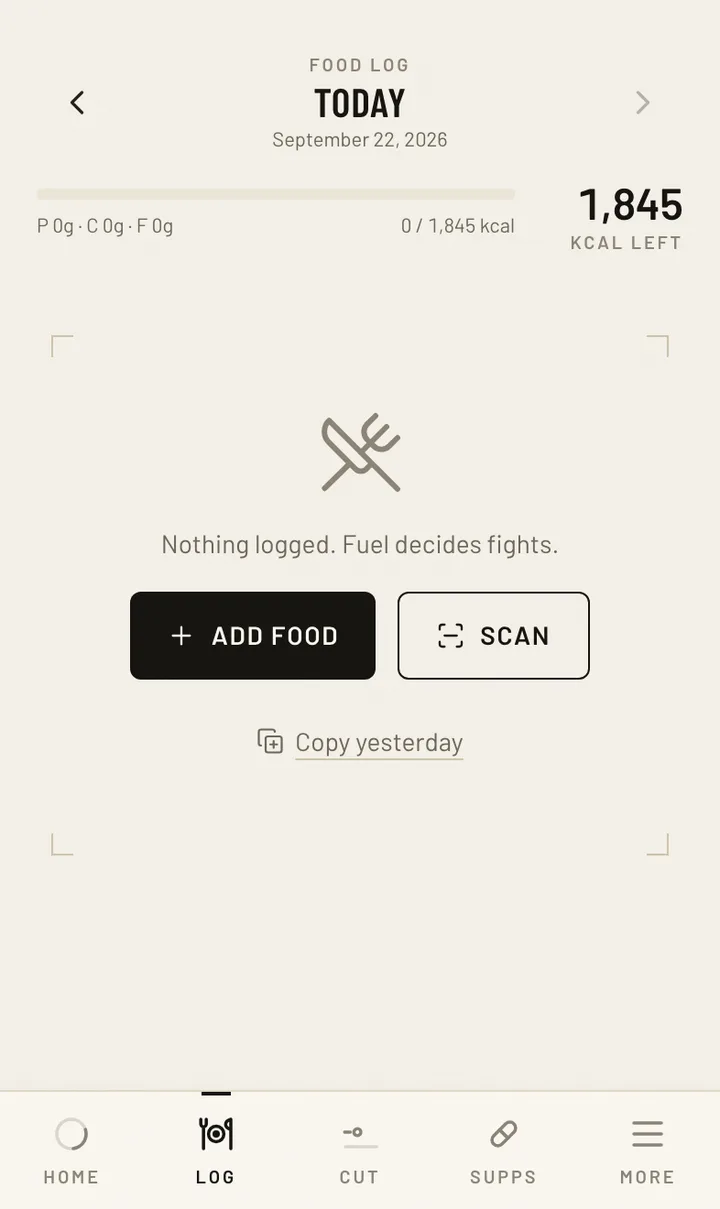
What a fighter can actually do with that, before seeing anybody, is narrow it. Three of those amplifiers — heat exposure, fluid state going into a session, and whether a tablet was taken — are things that either happened or did not on a given day, and a dated record of them alongside what was eaten is the difference between "my stomach is bad in camp" and a description a clinician can work with. Fighter Cut keeps that log because a record is more useful than a recollection, not because the log knows anything about your gut.
14. What is not this, and where this article stops
Some symptoms are not exercise-induced gastrointestinal syndrome, are not a deficit, and are not a training problem. They are described here and nothing further is said about them, because the only correct next step is a clinician.
The NHS says to see a GP if you have had blood in your poo for three weeks; if your poo has been softer, thinner or longer than normal for three weeks; if you are in a lot of pain around the bottom; if you have a pain or a lump in your tummy; if you have been more tired than usual; or if you have lost weight for no reason.
It says to get an urgent GP appointment, or call 111, if your poo is black or dark red, or if you have bloody diarrhoea. And it says to take immediate action — A&E or 999 — if you are bleeding non-stop, or if there is a lot of blood, for example the toilet water turning red or large blood clots.
On nausea, the NHS says to see a GP if you are feeling sick and do not feel better in a few days, or if you often feel sick and it keeps coming back. It says to call 999 for sudden nausea with chest pain that feels tight or heavy, pain spreading to your arms, back, neck or jaw, or shortness of breath.
Blood in the stool, black or dark red stool, bloody diarrhoea, persistent vomiting, severe pain, or weight falling when you are not trying to lose it are not training problems. They go to a doctor, and this article says nothing further about them.
The last item needs one clarification and no more. The NHS phrase is "you've lost weight for no reason", which reads oddly to someone deliberately cutting. The honest translation for a fighter is weight falling faster than the plan predicts, or falling when you are not trying. There is no number attached to that here, because putting one on it would be the exact thing this section exists to avoid.
And the reason not to self-attribute any of it to camp: the REDs consensus lists coeliac disease, inflammatory bowel disease, H. pylori, reflux, functional disorders and medication effects among the things that must be ruled out before these symptoms are attributed to a deficit. Nobody has been diagnosed with anything by reading an article. Diagnosis here is a clinician's job — the consensus's own assessment list is endoscopy, manometry, gastric emptying studies and imaging.
What we could not verify
Combat sport is nearly absent from this entire literature. One fetched study, n=24, elite, male, measured gut-barrier markers across a real pre-competition weight cut. Everything else in this article is running, cycling, triathlon and ultramarathon. We have not implied otherwise anywhere above and we are stating it once more here because the temptation to blur it is constant.
Women are under-represented or produce null results throughout. The gut-training review was 79% male and says its findings may not represent female athletes. The anxiety study found strong correlations in its 26 men and none in its 18 women. The laboratory cycling study and the anti-inflammatory crossover were male-only. The heat analysis had 35 women in 132 trials. The one combat study was male-only. There is no version of this article that can be written for a female fighter from measured data.
Adolescents and amateurs are absent. The gut-training review's age range began at 15, but no fetched source analyses adolescents separately, and nothing here supports advice to a youth fighter. All combat-sport data we have is elite; recreational fighters train with worse heat control and less monitoring and are entirely unstudied.
Intermittent high-intensity work has no measured equivalent. The two-hour threshold at 60% VO₂max is a steady-state endurance construct. A 90-minute sparring session with rounds and rests has never been measured for this. The closest analogue is the 35% I-FABP rise after 30 minutes of resistance exercise, and that is a single finding.
No source gives a fibre-restriction recovery timeline. We searched for how quickly normal bowel function returns after a low-residue period and found nothing in any fetched source. That absence is itself worth knowing, because it is routinely filled with confident numbers.
Four widely circulated figures were refused. The ubiquitous "30–90% of athletes get gastrointestinal symptoms" band chases to search results that attribute it vaguely to "early review literature", with no traceable origin — we could not find the study, so we did not print the number. The traceable figures are 30–50% of participants in exhausting endurance events, and a per-event table running from 7–11% in recreational runners to 96% in a 161 km ultra. Similarly "20–50% of athletes" is search-summary only, with no cohort and no instrument. "41% of elite weight-cutting judoka reported gastrointestinal symptoms during rapid weight loss" is the most tempting refusal on this list, because it is the one figure that would be combat-specific — it appeared only in a search summary, the underlying paper could not be identified with confidence, and it is refused anyway. And the hot-versus-temperate comparison sometimes quoted as a 432% against a 127% rise in I-FABP is search-summary level; we used the fetched core-temperature thresholds instead.
One source is named here and not cited. A 2026 scoping review titled "Gastrointestinal symptoms in athletes beyond endurance sports" exists and is exactly the paper that might carry combat-sport prevalence. It sits behind an authentication wall that we could not get through, so it was never read and nothing in this article rests on it. It is listed in the sources with that stated, because a source you know about and could not open should be visible rather than quietly omitted.
Questions fighters ask
Why am I nauseous in every hard session?
Most likely because of the normal physiology of hard exercise rather than anything you did wrong. Blood is redistributed away from the gut toward working muscle and skin — portal flow has been reported to fall 20% within 10 minutes and 80% after an hour of running at 70% VO₂max in trained adults — and sympathetic activation slows gastric emptying at the same time. Across endurance events, upper-gut symptoms including nausea predominate over lower-gut symptoms during exercise, so you are describing the more common presentation. That said, nausea that persists for days, keeps coming back, or arrives with chest pain or breathlessness is not this, and the NHS says to see a GP or call 999 respectively.
Is gut damage from training something I should worry about?
The laboratory evidence suggests the acute version is transient. In 20 healthy men cycling for an hour at 70% of maximal wattage, the injury marker roughly doubled and permeability markers moved, but there was no bacterial translocation and no renal damage, and the gastric marker of reduced blood flow was back to baseline an hour after the session. The cells involved are among the fastest-replaced in the body. What is unmeasured is the chronic version — what weeks of two-a-days in a deficit do — because no study has followed that in a fighter.
Does being dehydrated make my stomach worse?
Probably somewhat, and less dramatically than you have been told. Starting 2.7% down in body mass via sauna before cycling at 70% VO₂max impaired gastric emptying and worsened nausea against starting euhydrated — but in the same study hydration status did not affect transit time, permeability or glucose absorption. And the strongest controlled test, two hours of running at 70% VO₂max with total water restriction against euhydrated, produced significantly higher injury markers but only "modest perturbations" in symptoms and function overall. The marker moves more than the experience does. Drinking heavily to compensate is not the fix either, since exercise-associated hyponatraemia is itself linked to nausea and regurgitation.
Do anti-inflammatories make training harder on my gut?
Yes, on the evidence available. In a randomised crossover in nine healthy trained men, peak I-FABP was 875 ± 137 pg/mL for ibuprofen plus cycling against 474 ± 74 for cycling alone, 507 ± 103 for the drug at rest and 352 ± 44 for rest alone, with permeability ratios ordered the same way. A systematic review's own recommendation is that avoidance of NSAIDs prior to exercise would be recommended. We hold the crossover at abstract level and it is nine people. This article carries no doses of anything, and how much of what is appropriate for you is a question for a physician or a pharmacist who knows your kidneys, liver and other medications.
Will gut training stop this?
It will probably make you tolerate feeding better and it will not stop the underlying injury. Across eight studies — 79% male, almost all cyclists, runners and triathletes — gut discomfort fell 47% with two weeks of repetitive carbohydrate feeding and carbohydrate malabsorption fell 45–54%, but the review reports no significant changes in markers of intestinal injury and permeability, and no change in gastric emptying rate. There is also no standard protocol: durations ran 4 to 28 days and the review says plainly that a standard does not yet exist. None of it was run in a combat athlete, in a deficit, or against intermittent high-intensity work.
Is it the deficit or the training that is making me feel like this?
Both are implicated and the evidence cannot separate them for you. The IOC's 2023 REDs consensus lists impaired gastrointestinal function — abdominal pain, cramps, bloating, altered bowel movements — as a health outcome of low energy availability in male and female athletes, and the one combat-sport study found worsened symptoms and rising injury and inflammation markers across a four-week weight-loss phase in 24 elite men. The training-session mechanism is separately well described. What no study has done is disentangle them within one camp, which is why attributing your symptoms to one or the other is guesswork rather than reading.
Does eating before training cause it?
Food composition has measured associations with symptoms but nothing that resolves into a rule. Fibre, fat, protein and fructose have all been associated with greater symptom risk; drinks above 500 mOsm/L and exclusively-fructose drinks are the two most specific items flagged. Carbohydrate findings conflict across three studies. The most transferable finding is about practice rather than content: athletes unaccustomed to ingesting fluid and food during exercise had a twofold risk of symptoms. This article does not convert any of that into grams or timings, and a sports dietitian who can see what you actually eat is the right place for that conversation.
Should I go gluten-free to fix my stomach?
The evidence does not support doing it for this reason. Over 41% of a surveyed non-coeliac athletic population were following a gluten-free diet believing it reduced gut symptoms, but a blinded controlled study in 13 male and female athletes found no difference in gut symptoms, intestinal injury or systemic cytokine response with gluten versus without. A blinded trial, even a small one, carries more weight on this question than a survey of what people believe. Coeliac disease is a separate matter entirely and a medical diagnosis, and the REDs consensus lists it among the conditions to rule out before attributing gut symptoms to a deficit.
How long does the gut take to recover after fight week's low-fibre period?
Nobody has published an answer we could find. We searched the sources this article is built from and no fetched study gives a recovery timeline for bowel function after a low-residue or low-fibre period ends — not the duration, not the sequence, not whether it varies with how long the restriction ran. That absence is worth knowing precisely because confident numbers for it circulate widely. We are not estimating one. If this matters to your camp, it is a question for a sports dietitian who can see what you are eating.
Is a low-FODMAP diet worth trying in camp?
It has real symptom evidence and a cost that lands badly in a camp specifically. A case study reduced FODMAP intake from 81 to 7 g per day and abolished symptoms, and controlled crossovers report lower flatulence, urge to defecate, loose stool and diarrhoea on low-FODMAP arms — though we hold those crossovers at search-summary level. The 2017 systematic review calls it "a promising strategy", not established. The cost: a systematic review reports that in three included studies athletes could not meet estimated energy requirements on the diet and struggled to continue their training load, which is exactly the risk for someone already in a deliberate deficit.
Does anxiety about the weigh-in actually affect my gut?
There is measured correlation and the mechanism is plausible, but it is not proof of cause. In 44 ultramarathon runners, race gut symptoms correlated with stress at rs = 0.500 and anxiety at rs = 0.408, with the association strongest in the 24 hours beforehand; in the 26 men alone it was much stronger, at rs = 0.703 and 0.747. In the 18 women, no significant correlation was detected. It is correlational, from a single race, in recreational endurance athletes. What makes it more than a coincidence is that sympathetic activation reducing gut functional capacity is one of the two named pathways of exercise-induced gastrointestinal syndrome — so the anxiety route and the physiology route are the same route.
Are shorter sessions safe for the gut?
Shorter is not the same as exempt. The review-level threshold — two hours at 60% VO₂max — is where significant perturbations manifest irrespective of fitness status, but it was derived from steady-state endurance protocols and it is not a statement that nothing happens below it. A single 30-minute bout of resistance exercise significantly raised the injury marker by 35%, with impaired protein absorption afterwards in the same protocol. And no study has measured the intermittent high-intensity shape of a sparring session at all, so the equivalent threshold for a fighter's session does not exist.
How many fighters have this problem?
Unknown, and the numbers you will find quoted are mostly untraceable. The often-repeated "30–90% of athletes" band and the "41% of elite weight-cutting judoka" figure could not be traced to any identifiable study and are not used here. What is traceable: 30–50% of participants in exhausting endurance events report one or more symptom, rising with event severity from 7–11% in recreational runners to 60% in a 161 km ultra and 96% in another. All of those are endurance cohorts. The only combat-sport measurement we have is 24 elite men in whom weight loss alone worsened symptoms.
Does my gut get used to camp over time?
Not in the sense the question implies, and that is one of the clearer statements in this literature. The duration threshold is described as manifesting "irrespective of fitness status", so being fitter did not move it. Gut training can reduce how bad feeding-related discomfort feels — 47% in two studies — but it did not change markers of intestinal injury or permeability, and in elite athletes already performing at a high level the gains were minimal. Tolerance and protection are different outcomes, and the training evidence moves the first one.
Can the app tell me what is wrong with my stomach?
No, and nothing should. Diagnosis here is a clinician's job — the IOC consensus's own assessment list for impaired gut function is endoscopy, manometry, electrogastrography, gastric emptying studies and imaging, and its differential list includes coeliac disease, inflammatory bowel disease, H. pylori, reflux and medication effects. What a dated log of food, sessions, heat exposure and medication is actually good for is replacing "my stomach has been bad" with a record someone qualified can read. That is the whole claim, and it is a claim about records rather than about your gut.
Sources
Sourced to
- Systematic review: exercise-induced gastrointestinal syndrome—implications for health and intestinal disease — Costa RJS, Snipe RMJ, Kitic CM, Gibson PR, Alimentary Pharmacology & Therapeutics 2017;46(3):246–265, doi 10.1111/apt.14157, full text read
- Exercise-induced splanchnic hypoperfusion results in gut dysfunction in healthy men — van Wijck K, Lenaerts K, Grootjans J et al., PLoS One 2011;6(7):e22366, doi 10.1371/journal.pone.0022366, n=20 healthy men
- Aggravation of exercise-induced intestinal injury by ibuprofen in athletes — van Wijck K, Lenaerts K, van Bijnen AA et al., Medicine & Science in Sports & Exercise 2012;44(12):2257–62, PMID 22776871 — abstract level only, full text paywalled on two routes
- The increase in core body temperature in response to exertional-heat stress can predict exercise-induced gastrointestinal syndrome — Henningsen K, Henriksson H, Nyberg S et al., Temperature (Austin) 2023;11(1):72–91, doi 10.1080/23328940.2023.2213625, pooled analysis of 132 trials
- Gastrointestinal complaints during exercise: prevalence, etiology, and nutritional recommendations — de Oliveira EP, Burini RC, Jeukendrup A, Sports Medicine 2014;44(Suppl 1):S79–85, doi 10.1007/s40279-014-0153-2, PMID 24791919
- Impact of exercise-induced hypohydration on gastrointestinal integrity, function, symptoms, and systemic endotoxin and inflammatory profile — Costa RJS, Camões-Costa V, Snipe RMJ et al., Journal of Applied Physiology 2019;126(5):1281–1291, PMID 30896356 — abstract level only, publisher returned 403
- The effect of gut-training and feeding-challenge on markers of gastrointestinal status in response to endurance exercise: a systematic literature review — Martinez IG, Mika AS, Biesiekierski JR, Costa RJS, Sports Medicine 2023;53(6):1175–1200, doi 10.1007/s40279-023-01841-0, 8 studies from 304 screened
- Two weeks of repetitive gut-challenge reduce exercise-associated gastrointestinal symptoms and malabsorption — Miall A, Khoo A, Rauch C et al., Scandinavian Journal of Medicine & Science in Sports 2018;28(2):630–640 — the original gut-training trial, described here as reported inside sources 1 and 7
- The relationship between psychological stress and anxiety with gastrointestinal symptoms before and during a 56 km ultramarathon running race — Urwin CS, Snow RJ, Orellana L et al., Sports Medicine – Open 2021;7:93, doi 10.1186/s40798-021-00389-5, n=44
- 2023 IOC consensus statement on Relative Energy Deficiency in Sport (REDs) — Mountjoy M, Ackerman KE, Bailey DM et al., British Journal of Sports Medicine 2023;57:1073–1097, official PDF read in full
- Effects of probiotic supplementation on gut barrier function in combat athletes during pre-competition weight loss — Wang J, Lai M, Yang S, Cheng Z, Shen W, Zuo Q, Frontiers in Nutrition 2026;13:1857878, published 15 July 2026, n=24 elite male boxers, judoka and wrestlers
- Effect of running intensity on intestinal permeability — Pals KL, Chang RT, Ryan AJ, Gisolfi CV, Journal of Applied Physiology 1997;82(2):571–6 — the 40/60/80% VO₂max dose-response, reported here as it appears inside source 1
- Low FODMAP: a preliminary strategy to reduce gastrointestinal distress in athletes — Lis DM and colleagues on low-FODMAP approaches in athletes, Journal of the International Society of Sports Nutrition 2019 — full text returned 403; the FODMAP material here is drawn from source 1's description and from search-level summaries, marked as such in the text
- Bleeding from the bottom (rectal bleeding) — NHS, symptom guidance including the urgent and emergency thresholds quoted in section 14, accessed 23 September 2026
- Feeling sick (nausea) — NHS, symptom guidance including when to see a GP and when to call 999, accessed 23 September 2026
- Gastrointestinal symptoms in athletes beyond endurance sports: a scoping review — Performance Nutrition, volume 2, issued 4 February 2026 — named here and NOT used: the full text sits behind an authentication wall and was never opened, so no claim in this article rests on it
Read next
Plan the descent, don't guess it
Fighter Cut builds a week-by-week plan from today to your weigh-in, classifies the rate you are actually losing at, and logs what you eat against it. It does not make a cut safe — nothing does. It makes the numbers visible early enough to change them.
Open Fighter Cut