Fighter Cut › Articles › Supplements & nutrition
Supplements & nutrition
Bone health in combat athletes
Energy restriction moves bone markers the wrong way and combat sports load the skeleton hard. Both are established. What repeated weight cuts do to a fighter's bones has never been measured.
Eight camps in three years. Eight cuts. The question underneath that arithmetic is whether the skeleton kept a record of it.
The honest answer, before anything else: nobody knows, because nobody has measured it. No study in any combat sport has followed athletes through repeated weight cycles with serial bone scans and reported what the cumulative exposure did. The specific question — what eight cuts in three years did to your skeleton — has not been answered by research. Anyone who gives you a number for eight cuts is making it up.
That absence is not the end of the article. It is the reason for it, because the space around that absence is occupied by two bodies of evidence that point in opposite directions and are both real. Controlled laboratory work shows that a few days of severe energy restriction moves bone-turnover markers in the wrong direction — less formation, more breakdown. And the scan data that exists on combat athletes shows the opposite of a damaged skeleton: high bone mineral density in weight-class athletes, unaltered density across a measured weight cycle in elite judoka, better Z-scores in retired martial artists in their forties than in age-matched men who never competed.
Combat sports are loading sports, and loading builds bone. Energy deficiency attacks it. A fight camp with a cut in it does both at once, and the research has never watched what happens when they meet over years. This article lays out both sides with their conditions attached, says where each one stops, and does not pretend the tension resolves.
Every figure in this piece was measured in a described group of people under described conditions. None of it is a plan for your body, and a fight camp is the wrong time to experiment on yourself without a sports dietitian or a physician who can see you. A fighter with a history of stress injury, a history of restriction, or a real worry needs a referral and possibly a scan. Nothing here replaces that and nothing here justifies delaying it.
Studies measuring cumulative weight-cut count against any bone outcome, in any combat sport. The reader's literal question has no measured answer
Literature search, 23 September 2026; the nearest study covers one cycle
Bone mineral density across one pre-competition cycle of about 4% of body mass, measured by DXA at spine, femur and total body
Prouteau et al., Med Sci Sports Exerc 2006 (48 elite judoists, both sexes; obtained at secondary confidence)
The least significant change the IOC says a DXA facility must at minimum achieve at spine, hip and femoral neck before a scan-to-scan difference counts as a clinical change
IOC REDs consensus, Br J Sports Med 2023;57(17):1073–1097, Table 4 footnote
Share of participants in the ~178 REDs and low-energy-availability research publications behind the current consensus. Only a fifth of recent original studies included male athletes
IOC REDs consensus, 2023
- No study has measured cumulative cut count against bone in any combat sport. The only weight-cycling study with scans covers a single cycle: 48 elite judoists, both sexes, losing 4 ± 0.3% of body mass before competition, with bone mineral density unaltered by that cycle.
- In that same judo cohort, the cut produced an acute metabolic swing toward breakdown — cortisol up 81% and the resorption marker CTx up 33% (P<0.0001) — and a regain of 4 ± 0.5% of body mass flipped the balance back toward formation. The markers moved; the density did not.
- Five days of severe energy restriction moves bone markers the wrong way in controlled trials. In 11 eumenorrheic women at 15 versus 45 kcal/kg lean body mass per day, β-CTX rose (P=0.03) and P1NP fell (P=0.01). In 7 men in a separate pilot at 15 versus 40 kcal/kg fat-free mass per day, P1NP fell 14.9 ± 6.5% on lower protein and 24.8 ± 6.2% on higher protein against −4.4 ± 5.5% in the control condition (p=0.04). Extra protein did not rescue it.
- The newest controlled trial found loading did not rescue it either. In 12 recreational female runners at 15 kcal/kg fat-free mass per day for five days, β-CTX rose over time whether or not the athletes performed 50 jumps a day (main effect of time P=0.005; no interaction, P=0.716). That is the honest counterweight to the idea that impact protects a fighter's bones through a cut.
- What those markers mean over years is not established. The narrative review that tabulates this literature states plainly that the relationships between acute changes in bone formation and resorption markers and long-term bone health "are unclear." Every marker figure above sits inside that sentence.
- Retired combat athletes look good on a scan. Thirty men aged 40–50 who had competed in taekwondo, boxing, judo, karate or kickboxing and were at least ten years out had higher Z-scores than 20 age-matched non-athletes at the left femoral neck (0.32 vs −0.56, p=0.001) and the lumbar spine (−0.15 vs −1.15, p=0.0048). The study recorded no weight-cutting history at all.
- A scan-to-scan difference smaller than about 5% to 7% is measurement, not biology. The IOC's own footnote sets the minimum least significant change at 5.3% for the spine, 5.0% for the hip and 6.9% for the femoral neck.
- No energy-availability figure in this article is a safe floor. The IOC disputes its own 30 kcal/kg fat-free mass per day threshold, which came from short-term laboratory work in a small sample of sedentary women and was intended as a guide rather than a diagnostic endpoint.
- There is no bone stress injury epidemiology for MMA, boxing, Muay Thai, BJJ, wrestling, judo or kickboxing. Every quantified figure in that area comes from runners, endurance athletes and military recruits.
- In the one year-long randomised trial that increased energy intake in exercising women with REDs biomarkers, 57% dropped out and the bone loss was not retarded. Eating more, in the only trial of its length the consensus cites, did not stop it.
1. The question the literature does not answer
Start with the shape of the gap, because everything downstream is an approximation to it.
To answer "what did eight cuts do to my skeleton," a study would have to recruit combat athletes, scan them at a standardised facility, follow them through multiple competitive cycles over years, record each cut's magnitude and method, and scan them again with the same machine and the same technique. It would need enough athletes to separate the effect of the cutting from the effect of the training, and it would need controls who train the same way without cutting.
That study does not exist. Not in MMA, not in boxing, not in Muay Thai, not in BJJ, not in wrestling, not in judo, not in kickboxing. The closest thing in the literature follows elite judoists through one weight cycle. Everything else is either a cross-sectional snapshot of what combat athletes' bones look like at a moment, or a controlled laboratory study of five days of restriction in runners and cyclists who are not combat athletes at all.
This is worth being blunt about, because the vacuum attracts confident answers. "Weight cutting causes osteoporosis in fighters" is not a finding. No study supports it. The only weight-cycling study with scans found density unchanged, and the only retired-combat-athlete dataset found better bone than in controls. Equally, "combat sports build bone so cutting doesn't matter" is not a finding either, because nobody has isolated the cutting from the training in anyone.
What follows is the evidence that exists, arranged by what it can and cannot support.
2. What "bone health" is actually measured as
Four instruments appear in this literature and they answer different questions.
Bone mineral density by DXA. A scan that measures mineral content per unit area at defined sites — lumbar spine, total hip, femoral neck, whole body. It is the standard clinical measure and it is slow: bone density changes over months to years, not weeks.
Z-score and T-score. A Z-score compares a person's density to others of the same age and sex. A T-score compares them to young-adult peak density. For a premenopausal woman or a man under 50, the Z-score is the relevant statistic, and it is the one the IOC's assessment tool uses. T-scores in young athletes produce impressive-looking numbers that do not mean what they appear to — a point this article returns to.
Bone turnover markers. Blood or urine measures of the two processes running constantly in bone. Formation markers include P1NP, P1CP and osteocalcin. Resorption markers include β-CTX and NTX. These move within days, which is why every controlled energy-restriction study uses them and why every such study is short.
Bone stress injury. The clinical outcome: a stress reaction or stress fracture, classified by site into high-risk (femoral neck, sacrum, pelvis) and low-risk. This is what an athlete actually experiences, and it is the outcome with the least combat-sport data of all.
The distinction between the third instrument and the first two is the single most important thing to carry through the rest of this article. Markers are fast and available; density and fractures are slow and meaningful. The literature on energy restriction and bone is overwhelmingly about markers, for the obvious practical reason that you cannot keep someone in a controlled deficit for two years.
3. Five days in a laboratory: the restriction studies
The foundational work is Ihle and Loucks, published in 2004. Twenty-nine regularly menstruating, habitually sedentary young women of normal body composition were exercised on a treadmill and held for five days at energy availabilities of 45 kcal per kilogram of lean body mass per day — the balanced control — or 30, 20 or 10.
At 30 kcal/kgLBM/d, osteocalcin fell by 0.9 ± 0.3 ng/mL and P1CP by 16 ± 8 ng/mL, with no effect on the resorption marker NTX. At 10 kcal/kgLBM/d, osteocalcin fell 2.3 ± 0.5 ng/mL, P1CP fell 48 ± 13 ng/mL, and NTX rose 17 ± 4 nM BCE/mM Cr (p<0.01). P1CP declined linearly across the restricted conditions (p<10⁻⁶), and the authors noted that most of the osteocalcin suppression "occurred abruptly between 20 and 30 kcal/kgLBM/day."
Two things follow from that study and only two. Formation is suppressed at a less severe restriction than the one that raises resorption — the building side gives way first. And the number that the whole field now repeats, 30 kcal per kilogram of fat-free mass per day, originated here: in sedentary women, over five days, on a laboratory-controlled diet and a treadmill. Not fighters. Not men. Not a season.
The later trials extend the pattern and inherit the design limits. Papageorgiou and colleagues ran 11 eumenorrheic women and 11 men through a crossover of five days at 15 versus 45 kcal/kgLBM/d with daily treadmill running at 70% of VO2peak. In the women, β-CTX was higher (P=0.03) and P1NP lower (P=0.01) in the restricted condition. In the men, neither marker moved.
A narrative review that tabulates the surrounding literature — three-day studies, dose-response studies, a 50%-restriction study in eight men — finds the same general shape: formation down, resorption up in the more severe conditions, with the female data considerably more consistent than the male.
None of these studies involves a combat athlete, a dehydration-led cut, or a period longer than five days. They are the most rigorous evidence available and they describe an exposure that only partly resembles fight week.
4. The male evidence contradicts itself, and the contradiction is the finding
The most interesting thing in this literature is a disagreement inside one research group.
The crossover described above found a clear female effect and no male effect at all — β-CTX P=0.46, P1NP P=0.12 in 11 men. Read casually, that is "men are protected."
The same group then published a randomised crossover pilot in seven men: mean age 23.9 ± 1.5 years, body fat 13.4 ± 2.0%, VO2peak 42.6 ± 2.4 mL/kg/min, five days at 15 kcal/kg fat-free mass per day on either 0.8 or 1.7 g/kg bodyweight of protein, against a control condition at 40 kcal/kg fat-free mass per day, with supervised daily cycling. P1NP fell 14.9 ± 6.5% on the lower protein intake and 24.8 ± 6.2% on the higher one, against −4.4 ± 5.5% in control (p=0.04). CTX-I rose 6.9 ± 6.2% and 0.2 ± 2.1% respectively, against −8.3 ± 3.9% in control (p=0.04).
That is a clear male effect. The two studies point in opposite directions in men.
Neither wins, and the reasons they do not are asymmetric in a way worth saying out loud. The first study's male null is an underpowered null at n=11 — an absence of a detected effect in a small sample is not evidence that no effect exists, and it cannot license "men are protected." The second is a self-described pilot at n=7, with a different energy-availability denominator, a different exercise mode (cycling rather than treadmill running, and cycling is low-impact), and a different control condition. It is not a replication that succeeded where the first failed. It is a different experiment.
The defensible sentence is that two small five-day studies from the same group point in different directions in men, for reasons that include design differences as much as biology. Do not average them and do not pick one.
Behind both of them sits the structural problem the IOC names directly. Roughly 80% of the REDs literature is female, and the consensus states that only a fifth of recent original studies included male athletes. The female data does not transfer to men, and the male data is too thin to reassure them. Neither gap closes with a coefficient — and specifically, the male range the consensus mentions is not a scaled-down version of the female threshold:
"While a universal cut-off of 30 kcal/kg FFM/day as a threshold of LEA leading to some REDs outcomes in females is debated, such a cut-off or range at which males experience REDs-related symptoms is even less understood, but appears to be lower (eg, ~9 to 25 kcal/kg FFM/day)."
Read the whole sentence, including "debated" and "even less understood." It is a statement about how little is known, not a number to aim at.
5. The newest trial: jumping did not rescue it
The most natural defence a fighter reaches for is that fighting is impact. Bone responds to loading; a striker's tibia, a wrestler's spine and a judoka's femur take loading no runner approximates. Surely that covers it.
The newest controlled trial in this area tested exactly that logic and did not find it.
Twelve recreational female runners, mean age 26.4 ± 3.9 years, VO2max 45.3 ± 7.2 mL/kg/min, completed a randomised crossover: five days at 15 kcal per kilogram of fat-free mass per day, running daily, with or without 50 jumps a day added. β-CTX rose over time in both conditions — main effect of time P=0.005, from 0.32 ± 0.21 to 0.36 ± 0.15 ng/mL in the running condition and 0.38 ± 0.21 to 0.42 ± 0.19 ng/mL in the running-plus-jumps condition — with no interaction between condition and time (P=0.716). P1NP did not change (time P=0.517, condition P=0.187). Sclerostin was unchanged.
In that trial, adding high-impact loading did not blunt the rise in bone resorption caused by five days of severe energy restriction. The narrative review that proposed impact loading as a countermeasure in the first place says of its own hypothesis: "It is currently unclear whether this would be of benefit to long-term bone health."
The conditions matter, as always. Twelve recreational female runners, five days, fifty jumps. That is not a Muay Thai session and it is not a season. What it establishes is narrower than the headline and more useful than it: at least once, under controlled conditions, impact did not cancel the deficit. "Impact loading protects fighters' bones from weight cutting" is not something this literature supports.
6. What a bone marker is not
Every figure in the last three sections is a blood or urine measurement taken over five days, and there is one sentence that bounds all of them. The review that tabulates this literature states that the "relationships between acute changes in markers of bone formation and resorption … and long-term bone health are unclear."
That is not a hedge. It is the state of the field. Nobody has shown that a five-day rise in β-CTX predicts a fracture, a Z-score, a broken hand, or anything a fighter will ever feel. The markers are measuring something real about the rate of a process. What that process integrates to over three years of cutting has not been established in anyone, let alone in a fighter.
The same review explains why: "The lack of longitudinal and controlled trials is likely due to difficulties in accurately monitoring changes in energy availability … for periods long enough to observe structural bone change." Keeping people in a verified deficit long enough for their density to move is, in practice, close to impossible outside a clinical population.
So the marker studies are best read as evidence about direction under a severe short exposure, and as nothing at all about magnitude over a career. Anyone converting a five-day CTX change into a career-long bone loss estimate is doing arithmetic the sources refuse to do.
7. The other side: what combat athletes' bones actually look like
Now the scans, which point the other way.
Whole-body bone mineral density in male weight-classified athletes — wrestlers and judoka — has been reported as higher than in male endurance athletes and non-athletes, despite pre-competition rapid weight loss. That is a direction, reported at secondary confidence; the publisher blocked retrieval and the numbers, sites and sample sizes could not be verified, so no values appear here.
A cross-sectional DXA cohort of 135 athletes across sports reported the highest whole-body T-scores in professional MMA fighters, ahead of collegiate footballers and resistance-trained men. That figure circulates as "MMA fighters have the strongest bones in sport," and it should not.
Two reasons. First, a T-score compares a young athlete to young-adult peak density; for a premenopausal woman or a man under 50 it is the wrong statistic, and the IOC's own tool uses Z-scores. A high T-score in a 27-year-old athlete is partly a reference-range artefact. Second, a cross-sectional snapshot of who has dense bones says nothing about what weight cutting did to them — the fighters were never scanned before they started cutting, and the subgroup's size and sex breakdown could not be verified.
What survives from this section is modest and still meaningful: combat athletes, on the scans that exist, do not look like a population with damaged skeletons. That is a real observation about a real population. It is not a controlled comparison and it is not a longitudinal one.
8. The one study of a measured weight cycle
The closest the literature comes to the reader's question is a 2006 study of elite judoists.
Forty-eight elite judoists, male and female, were scanned by DXA at the lumbar spine, femur and total body and followed across the first weight cycle of the season. As a group they displayed high bone mineral density and an increased rate of bone formation. Precompetitive weight loss averaged 4 ± 0.3% of body mass and produced an acute rise in cortisol of 81% (P<0.05) and in the resorption marker CTx of 33% (P<0.0001) — a metabolic imbalance favouring breakdown. A regain of 4 ± 0.5% of body mass restored a positive balance favouring formation.
Bone mineral density was unaltered by the weight cycle.
Read that carefully, in both directions. The markers confirmed what the laboratory studies predict: a cut swings bone metabolism toward resorption, measurably, in real elite competitors rather than in sedentary volunteers. And the scans found no density change from it, with the marker swing reversing on regain.
The conditions: one cycle, about 4% of body mass, elite judoists of both sexes, published in 2006, with the sex split in the cycle result not obtainable. This article carries the study at secondary confidence — the abstract was obtained through a search-result summary because two publishers blocked direct retrieval.
One cycle at 4% is not eight cuts in three years, and 4% is a modest cut by the standards of the sport — see how much weight fighters actually cut for what the larger end of that distribution looks like. The judo study is the best evidence available and it covers a fraction of the exposure the question is about.
9. Retired martial artists, and what a cross-section cannot see
The only dataset located on combat athletes long after competition is a 2025 study of 50 men aged 40 to 50: 30 retired martial artists from taekwondo, boxing, judo, karate and kickboxing, all at least ten years since their last competition, against 20 age-matched non-athletes. DXA at the left femur (neck, Ward's area, trochanter, shaft and total) and the AP lumbar spine, L1–L4.
The Z-scores, retired athletes versus non-athletes: left femoral neck 0.32 versus −0.56 (p=0.001); left femur total 0.28 versus −0.29 (p=0.047); AP spine −0.15 versus −1.15 (p=0.0048). In the authors' words, "100% of retired athletes had normal bone density with a Z-score ≥ −1.9 and a T-score > −1.1," while among the non-athletes 65% were normal, 20% had abnormal density and 15% were osteopenic.
On its face that is reassuring, and it is the strongest long-horizon signal available. Four caveats have to travel with it.
It is men only, at n=30 versus 20. It is cross-sectional — one scan each, no before, no trajectory. It recorded no weight-cutting history at all, which means it cannot tell us whether the cutting cost anything; only that this group, as a group, was not osteopenic at 45. And it is subject to survivorship: the men who stayed healthy are the men who turn up for a study at 45. Anyone whose career ended badly, or who stopped identifying with the sport, is not in the sample.
The authors add their own limitations: "Small sample size may reduce the statistical power … making it challenging to identify significant differences. Due to budget constraints, participants were asked about vitamin D deficiency rather than conducting blood tests. Self-reported data are liable to recall bias and social desirability bias."
So: 30 retired men looked good on a scan. That is what the study establishes.
10. Why a whole-body number can hide a weak site
Loading is site-specific, and so is its absence.
The consensus makes the point explicitly in its discussion of para-athletes: problematic low energy availability can impair bone "secondary to factors such as altered skeletal loading experienced by para athletes (ie, the lack of loading stimulus experienced by wheelchair athletes and/or low-impact sports)," and in unilateral amputees "the affected limb may exhibit reduced bone mineral density." Bone responds where it is loaded.
Applied to combat sports, that principle cuts against the whole-body reassurance in section 7. A striker's tibia and a wrestler's spine take loading; other sites take much less. A strong total-body reading can sit on top of a weaker site, which is precisely why the IOC's assessment criteria ask for lumbar spine, total hip or femoral neck Z-scores rather than a whole-body figure.
One opinion article proposes that in combat athletes specifically, upper-limb bone density "appear[s] to be more strongly affected by prolonged low energy intake than lower limbs." That is a hypothesis published in an opinion piece with no primary data, no p-values and no comparative numbers, and it is reported here as an opinion and nothing more.
In weight-bearing endurance athletes with functional hypothalamic amenorrhoea, the pattern reported by the narrative review is lower density at all measured sites, most pronounced at hip and femoral neck, with cortical thickness reductions at the tibial epiphysis, femoral neck and trochanter and inconsistent trabecular findings. That is the closest analogue available, in a different sport and a different sex profile.
Nobody has scanned fighters' loaded and unloaded sites across a cut. That study would be straightforward to run and has not been run.
11. What has to change before a scan means anything
This is the section that stops someone panicking over a number.
Suppose a fighter gets two DXA scans a year apart and the second is lower. Is that bone loss?
Usually it is not. Every DXA facility has measurement error, and a change smaller than that error is noise. The IOC consensus prints the floor in a footnote to its assessment criteria:
"A true BMD decrease (from prior testing) is ideally assessed in comparison to the individual facilities DXA's LSC based on the facilities calculated coefficient of variation (%CV). As established by ISCD, at the very least, LSC should be 5.3%, 5.0%, and 6.9% for the spine, hip and femoral neck to detect a clinical change."
Those are minimums. A facility with worse precision needs a larger change. Below roughly 5% to 7% at those sites, a difference between two scans is measurement, not biology.
Two further conditions follow from the same footnote and from ordinary practice. The scans should be at the same facility on the same machine, because between-machine differences are not comparable in the way this calculation assumes. And the consensus asks for a scan within the previous six months when assessing current status, which means an old scan answers a question about the past.
The same section also warns that the normative datasets behind Z-scores come from able-bodied general populations, with real limitations in how population comparisons get reported. A Z-score is a comparison to a reference group, not a direct measure of how strong a bone is.
None of which means a lower second scan should be ignored. It means the person who interprets it is a clinician with the facility's own precision figures, not a fighter with a phone.
12. Bone stress injury, and the hole where the combat-sport data should be
Bone stress injury is the outcome that actually ends camps, and it is where this evidence base is emptiest.
The IOC's assessment criteria treat it seriously. As a primary indicator: a history of one or more high-risk bone stress injuries — femoral neck, sacrum, pelvis — or two or more low-risk ones in the previous two years, or an absence of six months or more from training due to one. As a secondary indicator: one low-risk injury within the previous two years together with six months or more out of training. Bone stress injury also appears in the REDs health model's bone category with evidence drawn from female athletes, male athletes and anorexia nervosa populations.
The high-risk site list — femoral neck, sacrum, pelvis — is derived from running populations. So is almost everything quantitative in this area. No bone stress injury incidence data specific to MMA, boxing, Muay Thai, BJJ, wrestling, judo or kickboxing was located. Not a null result. An absence.
That absence matters for the fighter reading this, because a bone stress injury is an injury with no incident: no bad landing, no caught kick, nothing anyone in the gym would remember, and a bone that has hurt for weeks. That category is the subject of the injuries that arrive without an incident, and the surveillance built to catch it has never been run in a combat sport either.
The consensus also lists what a clinician considers before attributing a stress injury to energy availability: "External reasons (eg, training errors, surface, shoes) or internal issues (eg, body build, medical predispositions …)." Risk factors reported generically across the wider literature include low energy availability, low BMI, low bone density and prior bone stress injury, with prior injury the strongest — but the effect sizes circulating for that were not pinned to a retrievable primary source here and no figure is printed.
13. Adolescents: the outcome is failure to accrue, not loss
Youth wrestling and youth combat sports raise a different question, and the consensus answers it differently.
For adults, impaired bone health under low energy availability shows up as loss. For children and adolescents, the impairment the consensus names is "longitudinal loss of BMD/lack of expected bone accrual (younger populations)" — and the paediatric assessment criterion is a Z-score below −1 at the lumbar spine or total body less head, or a decrease in Z-score from prior testing. Alongside it: "a negative deviation of a paediatric or adolescent athlete's previous growth trajectory (height and/or weight)" is a primary indicator, and deviation from the expected growth curve appears in the model as an impairment in its own right.
The point is structural. An adolescent skeleton is supposed to be gaining. Not gaining is the injury, and it does not announce itself as a loss on any scan. The consensus does not treat adolescents as small adults anywhere — its serious-medical-indicator thresholds are age-split, with an adolescent bradycardia threshold of under 50 bpm against under 40 for adults, for instance.
It is also restrictive about measurement in this group: "body composition assessment is recommended only for medical purposes under 18 years of age," with exceptional circumstances requiring consensus among the athlete's health and performance team and guardian consent.
And then the gap. Weight cutting in adolescent combat athletes is documented as a behaviour — one study of female adolescent combat athletes reported that 73% purposefully engaged in weight loss practices, with habitual loss averaging 8.0% of body mass, though those figures are held here at secondary confidence. Its skeletal consequences are not documented at all. No study of adolescent combat athletes' bone accrual across weight-cutting seasons was located. One paper appeared to be exactly that and turned out to be a mis-served file: the PDF hosted at the URL is a different study entirely, on an unrelated subject, so the citation could not be established and it is not used here.
14. Calcium, vitamin D, and the fighter's actual next step
Two randomised trials in military recruits tested a calcium and vitamin D combination during basic training. The larger one, in 5,201 female US Navy recruits over eight weeks of basic training, reported stress fracture incidence reduced by 25%. The other, in Army basic combat training over nine weeks, maintained parathyroid hormone, raised the osteoprotegerin-to-RANKL ratio and prevented increases in bone resorption markers; a related Marine recruit trial using a fortified snack bar reported the same marker-level effect but no change in tibial microarchitecture.
Those were recruits absorbing a sudden, uniform, very large increase in weight-bearing loading, with unknown baseline intakes — not fighters cutting weight. No trial has tested whether either nutrient protects the skeleton of someone cutting repeatedly. This article prints no amounts, because a dose inside a study protocol is still a dose once it sits next to "reduced stress fractures by 25%," and the extrapolation from a recruit to a fighter in a deficit is one the trials do not license.
The consensus itself frames these nutrients the other way round. "Poor micronutrient intake (eg, calcium and vitamin D)" appears in its list of differential diagnoses to exclude for low bone density, alongside genetic bone disorders, hyperparathyroidism, malabsorption such as coeliac disease, malignancies, renal disease and medications including anabolic steroids. They are things a clinician rules out, not things an athlete self-treats. The broader question of what a long deficit costs at the micronutrient level is its own subject — what a long deficit costs beyond calories covers it.
It is also worth knowing how the one long treatment trial went. In the 12-month intention-to-treat randomised trial the consensus cites, which increased energy intake in exercising females with REDs-related biomarkers, the drop-out rate was 57% and there was improvement in some outcomes — resumption of menstrual function in selected participants — "but not all symptoms (eg, inability to retard bone loss)." Eating more, over a year, in the only trial of that length, did not stop the bone loss.
So where does a worried fighter actually go? To a physician. The findings that put bone into the consensus's moderate or high categories — a Z-score below −1 at the lumbar spine, total hip or femoral neck; one high-risk or two low-risk bone stress injuries in two years; six months out of training for one — are clinical assessments made by clinicians. The tool carries its own printed warning:
"these guidelines are not to be used in isolation and are not to be solely used for diagnosis. Furthermore, these guidelines are less reliable when it is impossible to assess all indicators in table 4. These guidelines are not a substitute for professional clinical diagnosis, advice and/or treatment from a team of REDs health and performance experts led by a physician"
It is not something a fighter scores themselves, and nothing in this article is either.
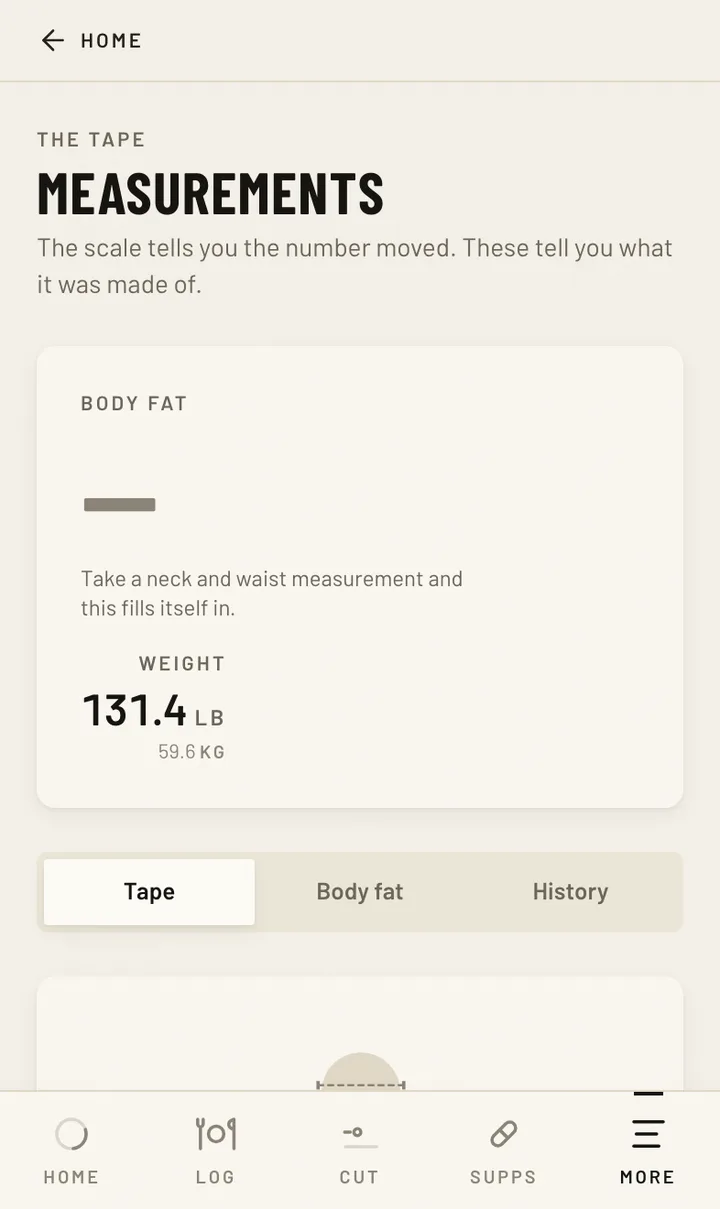
That is the limit of everything a fighter can track at home, and it is worth stating plainly because the tools that feel most precise are the ones furthest from this question. A body-fat figure and a bodyweight trend describe soft tissue. Bone is not in the readout. A fighter who has had a stress injury, who has restricted hard for years, or who simply wants to know, needs a referral and possibly a DXA scan at a facility that can tell them its own precision figures. Fighter Cut logs what happened in a camp; it does not and cannot assess a skeleton.
What we could not verify
This section is longer than usual because the subject is mostly absence, and naming the absences precisely is more useful than the findings around them.
- The reader's actual question: what repeated cuts do to bone. No study in any combat sport has measured cumulative cut count against any bone outcome. There is no dose-response between number of cuts and density, fracture, marker or Z-score. The nearest study covers one cycle in elite judoists. No number for eight cuts exists, and any number offered for it is invented.
- Bone stress injury rates in combat sports. None exist for MMA, boxing, Muay Thai, BJJ, wrestling, judo or kickboxing. Every quantified figure in that area comes from runners, endurance athletes, military recruits and clinic-referred populations. The high-risk site list in the IOC criteria is derived from running.
- Adolescent combat athletes' bone accrual. No study located. The paper that appeared to be exactly that — a seasonal bone density study in high school wrestlers — could not be cited, because the PDF served at the hosting URL is a different paper entirely on an unrelated subject. The citation could not be established and it is refused rather than reported. The weight-cutting prevalence figures for adolescent combat athletes (73% engaging in weight loss practices; habitual loss averaging 8.0% of body mass) were obtained at search-summary level only and are held at secondary confidence.
- The reverse sex gap, which runs in both directions at once. Roughly 80% of the REDs literature is female, and the IOC says only a fifth of recent original studies included male athletes — so the general evidence base is female and its transfer to men is uncertain. Meanwhile the combat-sport bone data is the opposite: the retired-athlete study is men only, the weight-classified BMD comparison is male, and the judo weight-cycling study includes both sexes but its cycle result could not be obtained with a sex split. The field has the usual gap in one place and its mirror image in the other, and the two do not cancel. Neither closes with a coefficient.
- Whether men are affected by low energy availability at the bone level. Two studies from the same research group reach opposite conclusions. The 2017 crossover found a female effect and a male null at n=11 per sex (β-CTX P=0.46, P1NP P=0.12 in men). The 2021 pilot found a clear male suppression at n=7, with a different energy-availability denominator, a different exercise mode and a different control condition. This article does not average them, does not choose between them, and does not read the null as protection, because an underpowered null is not evidence of absence.
- Whether five-day marker changes mean anything over a career. The review that tabulates this literature says the relationships between acute marker changes and long-term bone health "are unclear," and explains the reason: nobody can keep athletes in a verified deficit long enough to observe structural bone change. No marker figure in this article has been shown to predict a fracture, a Z-score or anything a fighter can feel.
- Any energy-availability figure as a safe floor. The 30 kcal/kg fat-free mass per day threshold came from short-term laboratory work in a small sample of sedentary women and was intended as a guide rather than a diagnostic endpoint. The consensus's own position is that "there are risks in setting a definitive clinical threshold of EA due to many moderating factors," and that real-world observation has "identified large differences in the EA level associated with health and performance concerns between individuals, the sexes, and among different body systems." The male range it mentions is described as "even less understood." No number here is a target and no body-fat percentage appears as one either.
- Numbers from two papers that could not be retrieved. The Clinical Nutrition ESPEN comparison of weight-classified, endurance and non-athlete men returned publisher errors on repeated attempts, so only its direction of effect is reported and no values, sites or sample sizes. A 2026 Sports Medicine paper directly on sport-specific impact loading and bone density in relation to REDs assessment is paywalled; its DOI and title verify in Crossref, so it is listed as existing, but nothing from its contents appears here.
- The T-score figure for professional MMA fighters. Reported at secondary confidence from a cross-sectional cohort whose MMA subgroup size and sex breakdown could not be verified — and a T-score is the wrong statistic in a young athlete regardless. No headline about fighters having the strongest bones in sport is supportable from it.
- Site-specific effects in combat athletes. What exists is one opinion article's hypothesis about upper limbs, with no primary data, plus the general loading principle from the consensus's para-athlete discussion. Nobody has scanned fighters' loaded and unloaded sites across a cut.
- Whether the method of cutting matters. A dehydration-led cut and an energy-restriction-led cut are physiologically different exposures, and no bone study located separates them. The judo study reports about 4% of body mass lost by unspecified means.
- Amateurs, and anyone with a day job. Every combat-sport bone dataset located is elite, collegiate, professional or retired-elite. The amateur training four nights a week around work, cutting eight times in three years, appears in no cohort here.
- Any prior-injury odds ratio. The frequently quoted threefold figure for a prior bone stress injury raising the odds of a future one could not be pinned to a retrievable primary source, so no figure is printed.
- Anything about you. This article describes a body of evidence and the holes in it. It does not diagnose, it does not assess a scan, and it does not override a physician, a coach or gym medical staff.
Questions fighters ask
Does cutting weight damage your bones?
Nobody has measured it, and the evidence that exists points both ways. Five days of severe energy restriction reliably moves bone markers the wrong way in laboratory studies — less formation, more resorption. But the only study to scan combat athletes across a real weight cycle, 48 elite judoists losing about 4% of body mass, found bone mineral density unaltered by that cycle even though the markers swung toward breakdown and then swung back on regain. And 30 retired male martial artists in their forties had better Z-scores than age-matched non-athletes. Combat sports load the skeleton hard, which builds bone, and energy deficiency attacks it. Both are true, no study has isolated one from the other, and nobody has measured cumulative cut count against bone in any combat sport.
I have cut eight times in three years. How much bone have I lost?
There is no answer to that question in the research literature, and anyone who gives you a percentage is making it up. No study has followed combat athletes through repeated weight cycles with serial scans. The nearest thing is a single cycle in elite judoists, where density did not change. What you can do, if it matters to you, is ask a physician whether a scan is warranted — and if you have one, keep it, because a second scan at the same facility years later is the only way anyone will ever be able to tell you something specific about your own skeleton.
Should I get a DXA scan?
That is a decision for a physician, not an article, and the threshold is clinical rather than curious. The findings that put bone into the IOC's concern categories are a Z-score below −1 at the lumbar spine, total hip or femoral neck, or a history of bone stress injury — one at a high-risk site such as the femoral neck, sacrum or pelvis, or two low-risk ones, within two years, or six months out of training because of one. If you have a history of stress injury, a long history of restriction, or a real worry, that is a reason to ask for a referral. The consensus prints its own warning that its tool is not a substitute for physician-led clinical assessment.
My scan is lower than last year's. Have I lost bone?
Possibly not. Every DXA facility has measurement error, and a change smaller than that error is noise rather than biology. The IOC consensus states that, at minimum, the least significant change should be 5.3% at the spine, 5.0% at the hip and 6.9% at the femoral neck before a difference counts as a clinical change — and those are floors, so a less precise facility needs a bigger change. The scans should also be from the same machine at the same facility. Take both results to the clinician who ordered them; they can ask the facility for its actual precision figures, which is what the comparison really depends on.
What is the difference between a T-score and a Z-score, and which one matters for a fighter?
A Z-score compares your bone density to other people of your age and sex. A T-score compares it to young-adult peak density, which is how osteoporosis is defined in older adults. For a premenopausal woman or a man under 50 — most competing fighters — the Z-score is the relevant statistic, and it is the one the IOC's assessment criteria use. This matters because T-scores in young athletes produce impressive numbers that overstate what is being measured. A cross-sectional study reporting very high whole-body T-scores in professional MMA fighters is partly describing a reference-range artefact, not a health grade.
Does striking build bone in the shins and hands?
Bone does respond to loading, and loading is site-specific — the consensus makes that point explicitly when discussing athletes whose limbs are loaded unequally. But no study located has scanned fighters' loaded and unloaded sites across a cut, or measured the tibia under striking. The whole-body density figures that exist for combat athletes cannot answer a site question, and a strong total-body reading can sit on top of a weaker site, which is exactly why the clinical criteria ask for spine, hip and femoral neck rather than a whole-body number.
Does training hard protect me from what the cut does to my bones?
The newest controlled trial says not reliably. Twelve recreational female runners spent five days at 15 kcal per kilogram of fat-free mass per day, with or without 50 jumps a day added. β-CTX rose over time in both conditions with no interaction — the jumping did not blunt the resorption rise. The narrative review that proposed impact loading as a countermeasure says of its own idea that it is "currently unclear whether this would be of benefit to long-term bone health." That is a small five-day study in runners, not in fighters, so it does not close the question. It does mean that "impact protects you" is not something the evidence supports.
Are men protected from this?
No, and the claim rests on a misreading. One crossover study of 11 men and 11 women found an effect in the women and no detectable effect in the men — but an absence of a detected effect in 11 people is an underpowered null, not evidence that nothing happens. A pilot from the same research group, in seven men, found a clear suppression of bone formation. The two used different designs, so they are not a failed replication of each other; they are different experiments pointing different ways. The IOC states that only about a fifth of recent studies in this field included male athletes. The male evidence is too thin to reassure anyone.
Is the female evidence just the male evidence with a different number?
No, and the reverse is also wrong. Roughly 80% of participants in the REDs research base are female, so the general evidence is female-derived and its transfer to men is uncertain. The combat-sport bone data runs the other way — the retired-athlete study is men only, and the weight-class density comparison is male. The IOC's own sentence on this is worth reading in full: the 30 kcal/kg fat-free mass per day threshold for females "is debated," and any male equivalent is "even less understood, but appears to be lower (eg, ~9 to 25 kcal/kg FFM/day)." That lower range is not the female number scaled down. It is a statement about how little is known.
Is there a safe energy availability to cut at?
No number in this article is a safe floor, and the consensus refuses to give one. The famous 30 kcal per kilogram of fat-free mass per day figure came from five-day laboratory studies in a small sample of sedentary women and was intended as a guide, not a diagnostic endpoint. The IOC's own position is that real clinical observation has "identified large differences in the EA level associated with health and performance concerns between individuals, the sexes, and among different body systems," and that "there are risks in setting a definitive clinical threshold of EA due to many moderating factors." A number the publishing body disputes is not a target for a fighter.
Should I take calcium and vitamin D for my bones?
Ask a physician, and this article prints no amounts. Two randomised trials in military recruits tested a calcium and vitamin D combination during basic training: the larger one, in 5,201 female Navy recruits over eight weeks, reported 25% fewer stress fractures, and another prevented increases in bone resorption markers. Those recruits were absorbing a sudden, uniform, very large increase in loading with unknown baseline intakes — a different exposure from a fighter cutting weight, and no trial has tested whether either nutrient protects the skeleton of someone cutting repeatedly. The consensus lists poor calcium and vitamin D intake among the things a clinician rules out when investigating low bone density, not something an athlete self-treats.
Will eating more fix it?
In the only year-long randomised trial the consensus cites, it did not fix the bone. That trial increased energy intake in exercising females with REDs-related biomarkers over 12 months; the drop-out rate was 57%, and while some outcomes improved — menstrual function resumed in selected participants — the paper reports an inability to retard bone loss. That is one trial with heavy attrition in a female population, so it is not the last word on anything. It is a reason not to assume the problem reverses simply because the deficit ends.
My teenager wrestles and cuts weight. Is that different?
Yes, structurally. In adults the bone impairment under low energy availability shows up as loss; in children and adolescents the consensus defines it as a lack of expected accrual — failure to gain, on a skeleton that is supposed to be gaining. The paediatric criterion is a Z-score below −1 at the lumbar spine or total body less head, or a decrease in Z-score from prior testing, and a negative deviation from a young athlete's previous growth trajectory in height or weight is itself a primary indicator. The consensus also says body composition assessment is recommended only for medical purposes under 18. And then the gap: no study of adolescent combat athletes' bone accrual across weight-cutting seasons was located at all. This is a paediatrician's or sports physician's conversation, not a coach's.
Does a stress fracture mean my bones are weak from cutting?
Not by itself. Bone stress injury has an established place in the REDs framework, both as a listed impairment and as an assessment indicator, so it is a reasonable prompt to ask a physician about energy availability. But the consensus also lists the alternatives a clinician weighs first: training errors, surfaces, footwear, body build and medical predispositions. Note also that there is no bone stress injury incidence data at all for MMA, boxing, Muay Thai, BJJ, wrestling, judo or kickboxing — the site-risk classifications in use come from running populations. A stress injury is a reason to be assessed, not a verdict about the cutting.
Why is there so little research on this in combat sports?
Three reasons compound. The controlled work that can establish causation runs for days, because keeping people in a verified energy deficit for long enough to see structural bone change is close to impossible outside a clinical setting — the review says so directly. The observational work that could follow fighters for years would need repeat scans at one facility across multiple camps, which nobody has funded. And combat-sport injury surveillance is overwhelmingly acute and fight-night-focused, so the slow problems leave no record. The result is that the question fighters ask most often about their long-term health is one the literature has simply never addressed.
Sources
Sourced to
- 2023 International Olympic Committee's (IOC) consensus statement on Relative Energy Deficiency in Sport (REDs) — Mountjoy M, Ackerman KE, Bailey DM, Burke LM, Constantini N, Hackney AC, Heikura IA, Melin A, Pensgaard AM, Stellingwerff T, Sundgot-Borgen JK, Torstveit MK, Jacobsen AU, Verhagen E, Budgett R, Engebretsen L, Erdener U, British Journal of Sports Medicine, 2023;57(17):1073–1097. DOI 10.1136/bjsports-2023-106994, PMID 37752011
- Dose-Response Relationships Between Energy Availability and Bone Turnover in Young Exercising Women — Ihle R, Loucks AB, Journal of Bone and Mineral Research, 2004;19(8):1231–1240. DOI 10.1359/JBMR.040410
- Effects of reduced energy availability on bone metabolism in women and men — Papageorgiou M, Elliott-Sale KJ, Parsons A, Tang JCY, Greeves JP, Fraser WD, Sale C, Bone, 2017;105:191–199. DOI 10.1016/j.bone.2017.08.019, PMID 28847532
- Low Energy Availability with and without a High-Protein Diet Suppresses Bone Formation and Increases Bone Resorption in Men: A Randomized Controlled Pilot Study — Papageorgiou M, Martin D, Colgan H, Cooper S, Greeves JP, Tang JCY, Fraser WD, Elliott-Sale KJ, Sale C, Nutrients, 2021;13(3):802. DOI 10.3390/nu13030802, PMID 33671093
- Effects of High-Impact Exercise on Bone Marker Concentrations During Controlled Low Energy Availability in Recreational Female Runners — Calcified Tissue International, 2026;117. DOI 10.1007/s00223-026-01564-0, PMCID PMC13303319
- Effects of Low Energy Availability on Bone Health in Endurance Athletes and High-Impact Exercise as a Potential Countermeasure: A Narrative Review — Hutson MJ, O'Donnell E, Brooke-Wavell K, Sale C, Blagrove RC, Sports Medicine, 2021;51(3):391–403. DOI 10.1007/s40279-020-01396-4, PMCID PMC7900047
- Comprehensive health assessment of retired martial arts athletes: bone density, dietary intake, physical activity, and wellbeing — Alshaer T, Battikhi N, Amawi AT, Trabelsi K, Jahrami H, Bouedo P, Ghazzawi HA, Frontiers in Aging, 2025;6:1513936. DOI 10.3389/fragi.2025.1513936
- Bone Density in Elite Judoists and Effects of Weight Cycling on Bone Metabolic Balance — Prouteau S, Pelle A, Collomp K, Benhamou L, Courteix D, Medicine & Science in Sports & Exercise, 2006;38(4):694–700. DOI 10.1249/01.mss.0000210207.55941.fb, PMID 16679985 (obtained at secondary confidence; direct retrieval blocked by two publishers)
- Bone mineral density in male weight-classified athletes is higher than that in male endurance-athletes and non-athletes — Clinical Nutrition ESPEN, 2020. DOI 10.1016/j.clnesp.2020.01.006 (publisher returned errors on repeated attempts; direction of effect only, no values taken)
- Bone Mineral Density in Competitive Athletes — Antonio J, Leaf A, et al., Journal of Exercise and Nutrition, 2018. DOI 10.53520/jen2018.10314 (search-summary level; T-score figures not used as a health claim, see article text)
- Differential Risks of the Duration and Degree of Weight Control on Bone Health and Menstruation in Female Athletes — Uchizawa A, Kondo E, Lakicevic N, Sagayama H, Frontiers in Nutrition, 2022;9:875802. DOI 10.3389/fnut.2022.875802 (Opinion article; no primary data)
- Calcium and Vitamin D Supplementation Decreases Incidence of Stress Fractures in Female Navy Recruits — Lappe J, Cullen D, Haynatzki G, Recker R, Ahlf R, Thompson K, Journal of Bone and Mineral Research, 2008;23(5):741–749. DOI 10.1359/jbmr.080102 (search-summary level)
- Calcium and vitamin D supplementation maintains parathyroid hormone and improves bone density during initial military training: a randomized, double-blind, placebo-controlled trial — Gaffney-Stomberg E, Lutz LJ, Rood JC, Cable SJ, Pasiakos SM, Young AJ, McClung JP, Bone, 2014;68:46–56. DOI 10.1016/j.bone.2014.08.002, PMID 25118085 (search-summary level)
- Sport-Specific Impact Loading is Associated with Bone Mineral Density in Athletes: Implications for Relative Energy Deficiency in Sport (REDs) Assessment — Sports Medicine, 2026. DOI 10.1007/s40279-026-02478-5 (DOI and title verified in Crossref; full text paywalled and not retrieved, no contents used)
- Rapid weight loss practices in Olympic combat sports: a systematic review and meta-analysis — Frontiers in Physiology, 2022;13:830229. DOI 10.3389/fphys.2022.830229 (search-summary level; prevalence figures held at secondary confidence)
Read next
Plan the descent, don't guess it
Fighter Cut builds a week-by-week plan from today to your weigh-in, classifies the rate you are actually losing at, and logs what you eat against it. It does not make a cut safe — nothing does. It makes the numbers visible early enough to change them.
Open Fighter Cut